
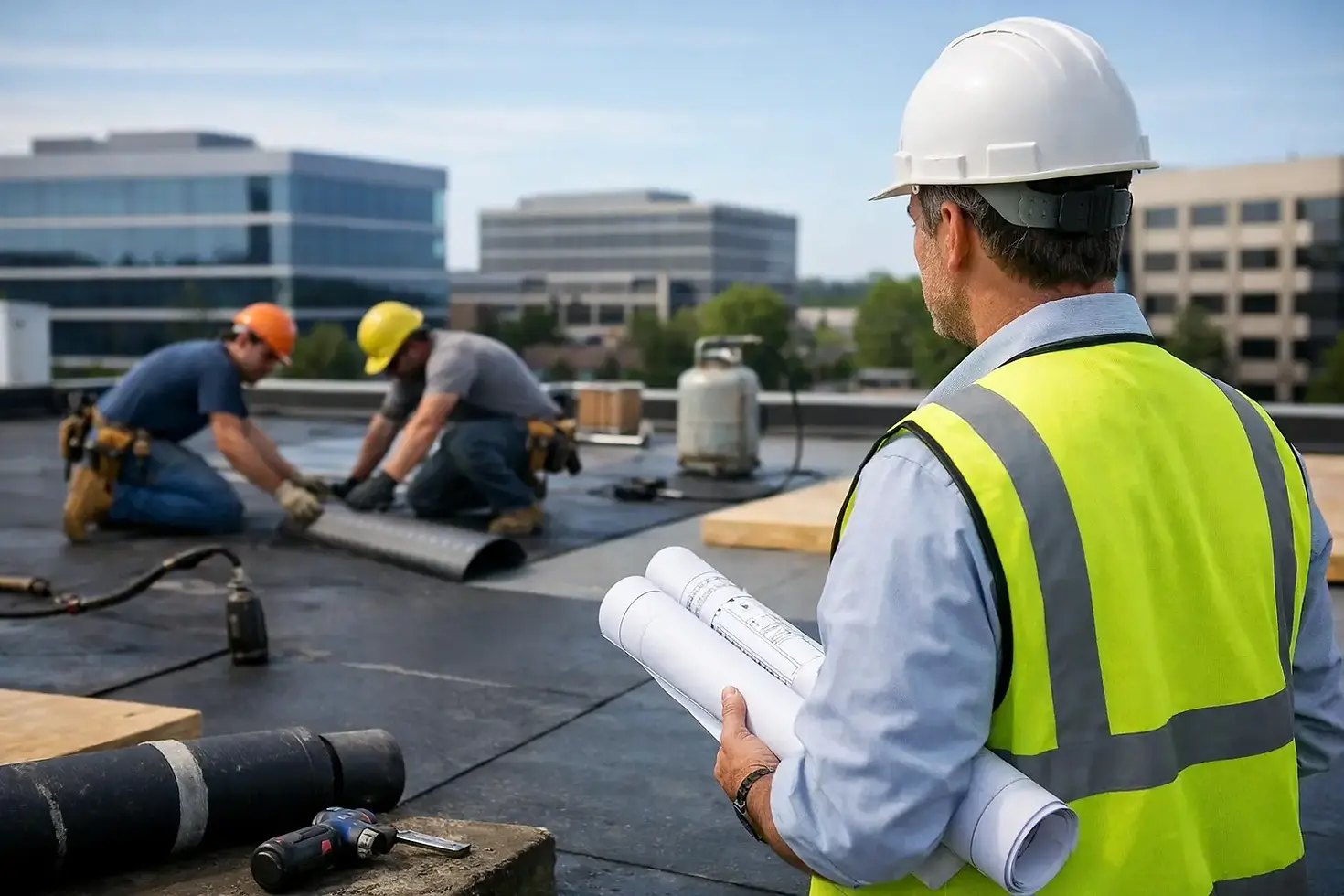
A Practical Guide to Commercial Roof Replacement

A leak above a tenant space, stained ceiling tile, or loose flashing after a Katy storm can quickly become more than a roofing issue. It can interrupt business, damage inventory, create safety concerns, and put pressure on your maintenance budget. This guide to commercial roof replacement helps property owners and managers make clear decisions before a small roof problem turns into a costly disruption.
Know When Commercial Roof Replacement Makes Sense
Commercial roofs are built to last, but they do not last forever. Sun exposure, standing water, wind, hail, foot traffic, poor drainage, and past repairs all affect how long a roofing system performs. A roof can look acceptable from the ground while moisture is working its way into insulation or decking below the surface.
Replacement may be the right move when leaks keep returning in different areas, repairs are becoming frequent, the membrane is cracking or pulling at seams, or the roof is nearing the end of its expected service life. Blisters, ponding water that remains more than 48 hours after rain, deteriorated flashing, and visible storm damage also deserve a closer look.
That does not mean every leak calls for a full reroof. A localized puncture, failed pipe boot, or damaged section of flashing may be repairable if the surrounding system is still in good condition. The key is getting an honest assessment of the roof as a whole, not just the spot where water showed up inside the building.
Start With a Thorough Roof Assessment
A proper inspection should identify the roof type, condition of the membrane or surface, drainage performance, flashing details, penetrations, insulation condition, and any visible deck concerns. The inspection should also consider the building's use. A warehouse, medical office, retail center, restaurant, and multi-tenant property can have very different access needs, drainage demands, and tolerance for construction activity.
Ask for photos and plain-language explanations of what was found. You should understand whether the recommendation is for repair, restoration, recover, or complete replacement and why. A dependable contractor will explain the trade-offs without trying to force a larger project than the roof needs.
Build the Right Scope Before Work Begins
Commercial roof replacement is more than putting a new surface over an old one. The scope should address the entire roofing system, including drainage, edge metal, flashings, penetrations, curbs, and transitions where the roof meets walls or equipment.
In some cases, a new system can be installed over an existing roof. This is often called a recover. It may reduce tear-off costs and shorten the project, but it only works when the existing roof is dry, securely attached, and allowed by local code and manufacturer requirements. A recover will not fix trapped moisture, damaged decking, or a roof with too many existing layers.
A full tear-off costs more upfront and creates more debris, but it gives the contractor access to the deck and insulation below. That can be the better long-term choice when moisture has spread, the existing materials have failed, or drainage needs to be corrected. The right answer depends on the building, the roof's condition, and what will protect the property best over time.
Do Not Overlook Drainage and Details
Most commercial roof failures happen at seams, penetrations, drains, walls, and edges rather than in the open field of the roof. Replacing a membrane without addressing poor drainage or deteriorated flashings can leave the building exposed.
During planning, confirm that drains, scuppers, gutters, and downspouts can move water away effectively. If water collects in low areas after every rain, the project may need tapered insulation, added drainage, or slope corrections. These details can affect the budget, but skipping them can shorten the life of the new roof.
Choose Materials for the Building, Not the Trend
There is no single best commercial roofing material for every property. The right system should match the roof slope, building use, equipment layout, weather exposure, budget, and maintenance plan.
Single-ply systems such as TPO and PVC are common on low-slope commercial roofs. They can provide strong weather resistance and reflective surfaces that help manage heat exposure. PVC is often considered where grease or chemical exposure is a concern, while TPO is widely used for its balance of performance and cost. Material quality and installation details matter as much as the name on the membrane.
Modified bitumen can be a practical choice for certain low-slope roofs, especially where a multi-layer system is preferred. Metal roofing may be a good fit for sloped commercial buildings that need durability and a distinct appearance, though details around fasteners, penetrations, and expansion need careful attention.
Roof coatings can extend the life of a qualifying roof, but they are not a cure for widespread wet insulation, failing seams, or structural problems. A coating system works best when the existing roof is still sound and properly prepared. If a contractor recommends a coating, ask what repairs and surface preparation are included before it is applied.
Plan for Cost, Timing, and Business Operations
A commercial replacement estimate should be detailed enough to show what you are paying for. The final cost can be affected by roof size, access, tear-off requirements, insulation thickness, deck repairs, drainage upgrades, material choice, rooftop equipment, and the complexity of flashings and edges.
The lowest proposal is not always the lowest-cost decision. A cheaper bid may leave out insulation replacement, edge metal, drain work, or cleanup. It may also rely on a thinner system or provide less clarity about warranty coverage. Compare scopes line by line so you are comparing the same work, not just the final number.
Scheduling matters, too. Discuss delivery access, parking, tenant communication, noise, odors, and how the crew will protect entrances, landscaping, HVAC equipment, and interior areas. For occupied buildings, the contractor should have a plan for keeping the site orderly and safe each day.
Weather is part of roofing work in the Houston-area market. Rain and high winds can change a schedule, but they should not lead to rushed installation. Ask how the crew secures exposed areas if conditions change during tear-off or installation.
Document Storm Damage Before Making Major Decisions
Wind and hail can damage commercial roofing in ways that are not obvious from the ground. After a major storm, arrange an inspection promptly and document interior leaks, ceiling damage, damaged equipment, and visible roof conditions. Save photos, dates, repair invoices, and maintenance records.
If insurance may be involved, review your policy and report damage according to its requirements. A roofing contractor can help document conditions and explain the scope of visible damage, but the insurance carrier makes coverage decisions. Clear documentation can make the process less stressful and help avoid confusion about what existed before the storm.
Cobra Contracting & Construction LLC works with commercial property owners who need straightforward inspection findings, storm-related support, and a clear plan for protecting the building.
Choose a Contractor Who Will Stay Accountable
Commercial roofing is a major investment, so ask direct questions before signing. Confirm licensing and insurance requirements for your project, experience with the proposed roofing system, manufacturer certifications, safety practices, warranty terms, and who will manage the job from start to finish.
You should also ask how unexpected conditions are handled. If wet insulation or damaged decking is found after tear-off, the contractor should document it, explain the options, and get approval before moving ahead with added work. Surprises happen on older buildings. What matters is whether they are communicated honestly and handled properly.
A reliable contractor will provide a written scope, explain the timeline, return calls, and leave you knowing who to contact if a question comes up. That kind of follow-through matters just as much after installation as it does during the sales process.
Protect the New Roof After Installation
A new commercial roof still needs attention. Schedule regular inspections, especially after severe weather, and keep drains and gutters clear. Limit unnecessary foot traffic, make sure HVAC vendors protect the membrane when servicing equipment, and have any new penetrations properly flashed by qualified professionals.
Keep your warranty documents, inspection reports, repair records, and project photos in one place. That file helps with maintenance planning, future insurance questions, and eventual property sales or lease discussions.
The best time to plan a commercial roof replacement is before active leaks begin affecting your building. A careful inspection and a clear scope give you room to make a sound decision, protect your occupants, and move forward without more disruption than necessary.


Comments