

Roof Storm Damage in Fulshear: What to Do First

A hard Texas storm can leave a roof looking fine from the driveway while water is already working its way beneath the shingles, flashing, or vents. When you suspect roof storm damage Fulshear property owners should act quickly, but safely. The first goal is not to diagnose every issue yourself. It is to prevent further damage, document what happened, and get a clear professional assessment before a small opening becomes an expensive interior repair.
Roof Storm Damage in Fulshear: Start With Safety
After high winds, hail, or heavy rain, do not climb onto the roof to inspect it. Wet roofing materials, loose shingles, hidden soft spots, and downed power lines can turn a simple check into a serious injury. A view from the ground, attic, and interior rooms can provide useful information without taking unnecessary risks.
Start by protecting the people and property inside the building. Move furniture, electronics, and valuables away from active leaks. Catch dripping water with buckets and use towels to limit water spread. If a ceiling is bulging with water, stay clear of that area. A large water-filled ceiling can fail without much warning.
If conditions are safe, take photos and short videos of visible damage around the property. Document shingles or metal pieces in the yard, damaged gutters, fallen branches, broken skylights, water stains, and any interior leaks. This record can help a roofing contractor identify the storm-related issues and can support an insurance claim later.
For immediate protection, focus on these practical steps:
Cover exposed belongings and contain water inside the building.
Remove small debris from ground-level drains only if it can be done safely.
Note the date and approximate time of the storm.
Call for emergency roofing help if water is actively entering the property.
Temporary protection matters, but it is not a permanent repair. Tarps and quick patches can reduce water intrusion while a full inspection and repair plan are arranged.
Damage Is Not Always Obvious
Wind damage does not always mean a dramatic section of missing shingles. Strong gusts can lift shingle edges, break seals, loosen flashing, or create openings around pipe boots and vents. Once the roof loses its weather-tight seal, wind-driven rain can reach the decking and attic insulation.
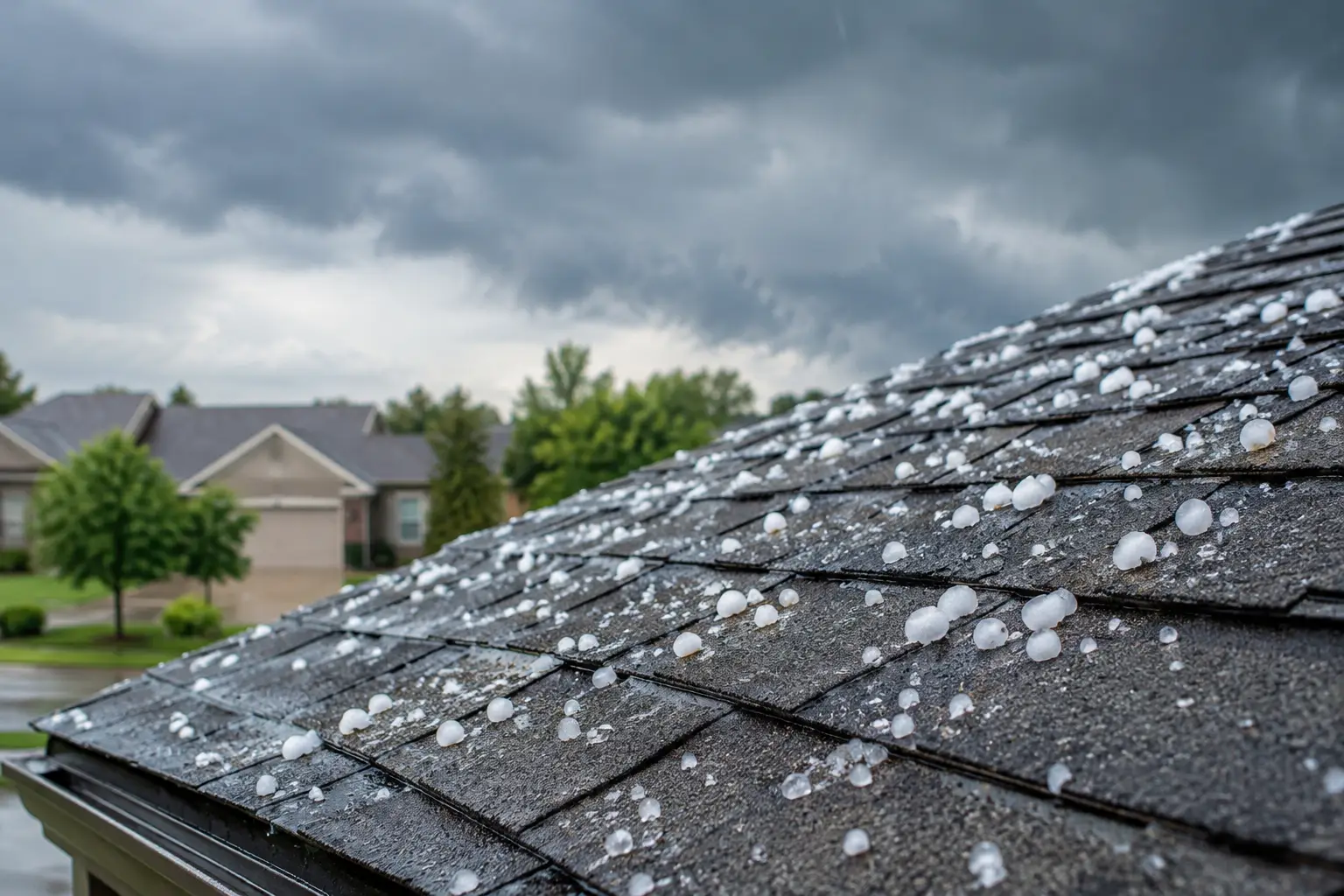
Hail can be even harder to spot from the ground. It may leave bruising, granule loss, cracks, or dents that shorten the life of shingles and other roof components. A roof can continue to shed water for a while after a hail event, which is why some property owners assume everything is fine. Months later, those weakened areas may show up as leaks, staining, or deteriorating materials.
Inside the property, watch for fresh ceiling stains, damp insulation, peeling paint, bubbling drywall, musty smells, or water around light fixtures. In commercial buildings, look for ponding water, membrane tears, open seams, damaged rooftop equipment curbs, and clogged drainage paths. These symptoms do not always point to the exact source of the problem, but they are all worth reporting during an inspection.
Do Not Wait for a Bigger Leak
The right response depends on the type and extent of damage. A few displaced shingles may call for a targeted repair. Widespread hail impacts, aged materials, repeated leaks, or significant wind damage may make replacement the more practical long-term choice. A dependable contractor should explain that difference plainly instead of pushing a larger job before the evidence supports it.
Waiting can create costs well beyond the roof itself. Moisture can damage decking, insulation, drywall, flooring, electrical components, and inventory. For a business or managed property, a delayed repair can also disrupt tenants, employees, customers, and daily operations.
There is a trade-off to consider. An emergency temporary repair may cost less upfront and stop immediate water entry, but it does not resolve hidden storm damage. On the other hand, replacing a roof too soon when a sound repair would do the job is not responsible either. The answer comes from a thorough inspection of the roofing system, not a quick look from the street.
What a Professional Roof Inspection Should Cover
A quality storm inspection should be methodical. The contractor should inspect the field of the roof along with the areas where leaks often begin: valleys, ridge caps, flashing, penetrations, vents, skylights, chimney areas, gutters, and drainage points. For commercial roofs, that also includes seams, drains, scuppers, edge metal, and areas around HVAC equipment.
The inspection should also include the attic or interior, when accessible. Looking at both sides of the roof helps identify whether moisture is recent, ongoing, or possibly caused by condensation or another issue. This matters because not every stain is a storm claim, and honest guidance saves property owners from chasing the wrong repair.
Ask for clear findings. You should understand what was damaged, what needs immediate attention, what can be monitored, and whether the recommended work is repair or replacement. Photos are useful, especially when the damaged area is not visible from the ground. A written scope also makes it easier to compare options and communicate with an insurance adjuster.
Cobra Contracting & Construction LLC takes a straightforward approach: inspect the roof, explain the findings in everyday language, and help property owners make a decision based on the condition of the roof and the needs of the building.
Handling Insurance After Storm Damage
Insurance claims can add another layer of stress after a storm. Your policy, deductible, roof age, prior damage, and the cause of loss can all affect coverage. File a claim only after you have enough information to describe the damage accurately, and keep copies of photos, inspection notes, receipts, and communications.
A roofing contractor can provide documentation and meet with an adjuster when needed, but the contractor does not decide coverage. The insurance carrier makes that decision. Be cautious with anyone who promises claim approval, offers to cover your deductible, or pressures you to sign before you understand the scope of work.
It also helps to separate emergency work from permanent restoration. Stopping an active leak may need to happen immediately to protect the property. The final repair or replacement plan can then be coordinated with the inspection findings and insurance process. Acting quickly to prevent additional damage is usually the responsible move, even while claim details are still being reviewed.
Repair, Replace, or Maintain?
Not every storm-damaged roof needs full replacement. If the damage is isolated and the existing roof is otherwise in good condition, a repair may restore protection and extend the roof's usable life. This is common when a branch damages one area or wind affects a limited section.
Replacement becomes more likely when damage is widespread, the roof is near the end of its expected life, matching materials are unavailable, or repairs would leave too many weak points behind. For commercial properties, the decision may also depend on drainage performance, membrane condition, tenant disruption, and the cost of repeated service calls.
Once storm repairs are complete, regular maintenance is the best way to catch trouble early. Keep gutters and drains clear, address loose flashing promptly, and schedule inspections after major weather events. A roof does not need attention every day, but it should not be forgotten until water reaches the ceiling.
A storm can move on in an hour, but roof damage can keep growing long after the sky clears. If something looks wrong, smells damp, or simply does not feel right after severe weather, getting a prompt inspection gives you facts, protects your property, and helps you move forward with confidence.


Comments